


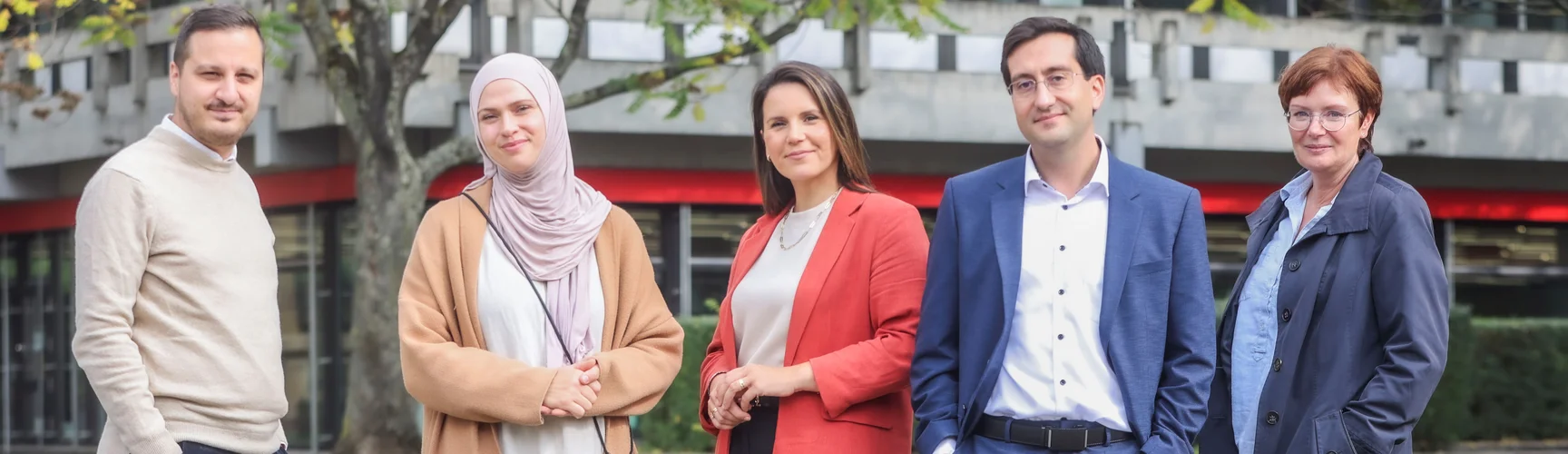
Department of Islamic Theology and Religious Education
Through its commitment to providing professional training and qualifications for teachers of religion, the Institute for Islamic Theology and Religious Education makes an important contribution to the realisation of religious education – as enshrined in the Basic Law – within Germany’s pluralistic society. A fundamental aim is to promote a reflective and context-appropriate understanding of religion that is compatible with the theological tradition of Islam.
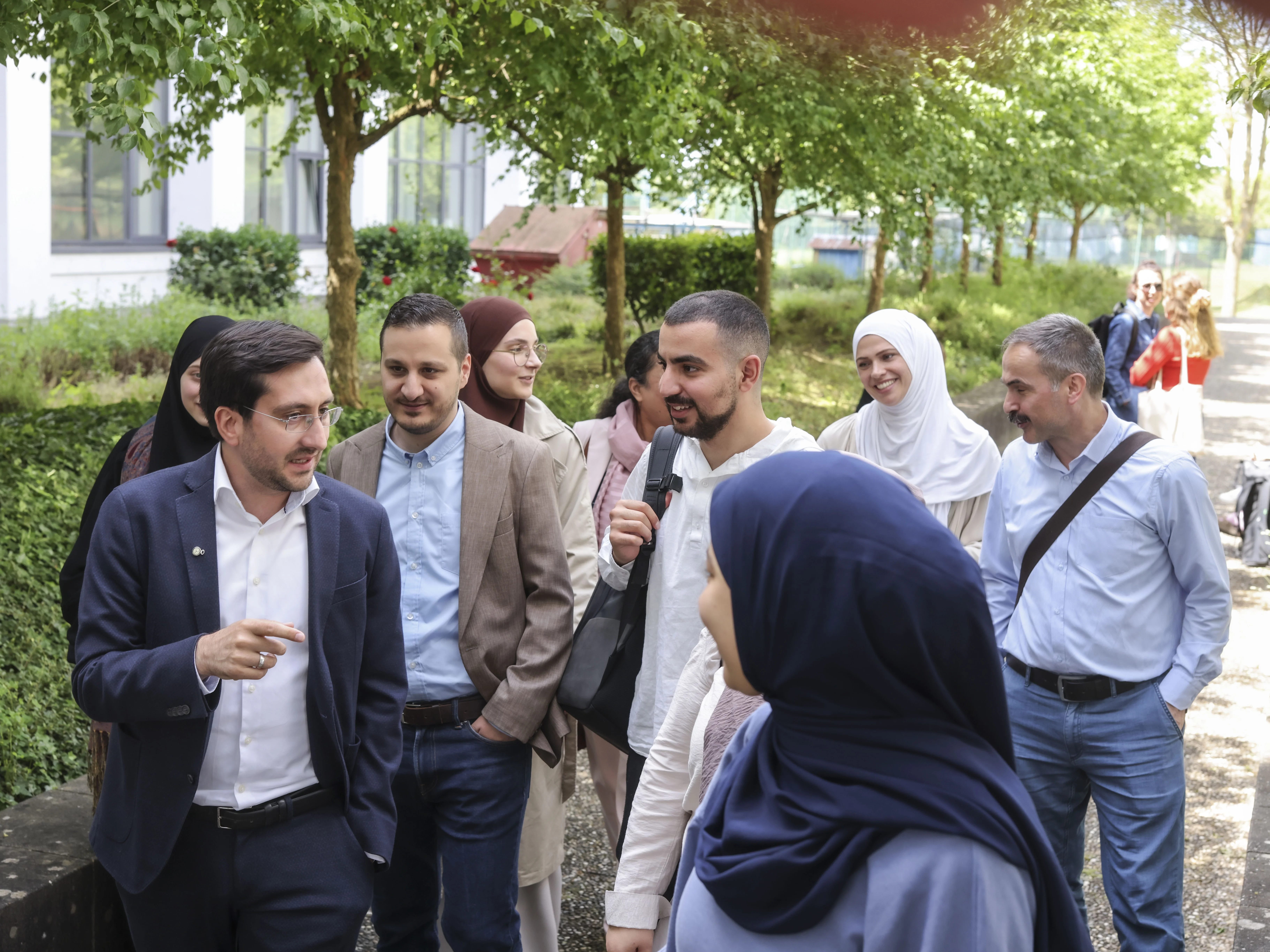
Islamic Theology at the Karlsruhe Campus
Through faith-based, open and practical teaching and research, through exchange and diversity, and through dialogue and networking, the Institute ensures that its work remains relevant to contemporary issues, diverse, pluralistic and student-centred.
Research and Publications
-
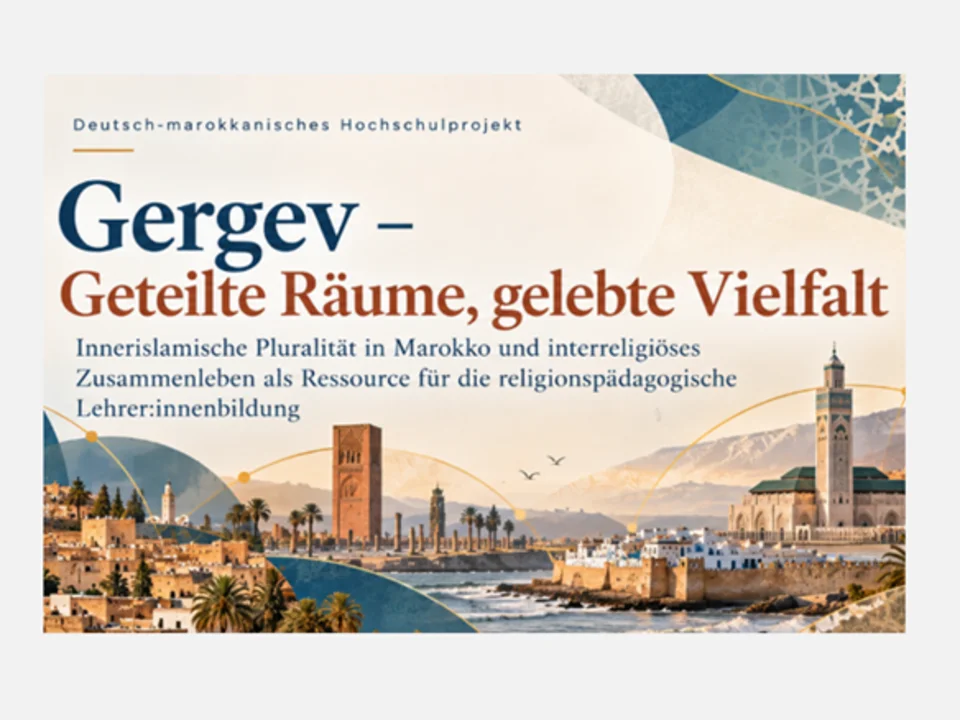
The Gergev Project
Shared spaces, diversity in practice
Intra-Islamic Pluralism in Morocco and Interfaith Coexistence as a Resource for the Training of Religious Education Teachers
The German-Moroccan higher education project Gergev focuses on intra-Islamic diversity, Jewish-Muslim relations and Christian-Islamic educational cooperation in two very different contexts.
-

Conference: Perspectives and practical explorations of interfaith education for sustainable development (irBNE)
As part of (and in collaboration with the organisers of) the Erasmus+ project ‘Religions. Environmental Education. Peace. Environmental Ethics as a Focus of Interreligious Cooperation in Teacher Training’ the Institute for Islamic Theology and Religious Education and the Institute for Catholic Theology at the Karlsruhe University of Education organised a conference on 12 May 2026 on the innovative approach to interreligious education for sustainable development (irBNE).
-
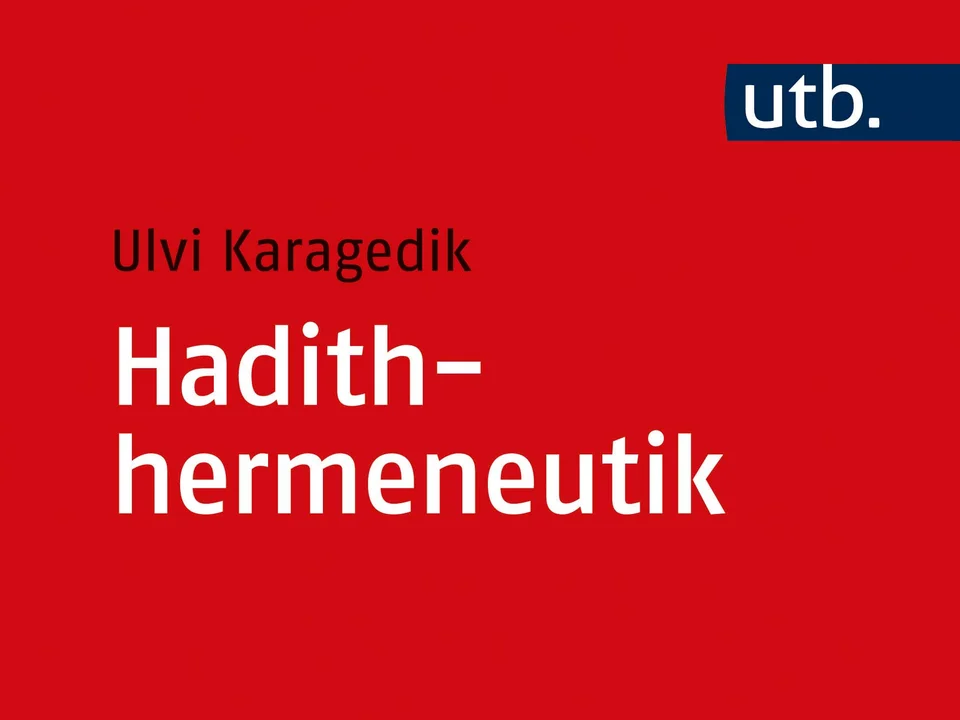
A monograph on the interpretation of hadiths
In addition to setting out the hermeneutical foundations, this book provides a concrete framework for analysing the hadith and applies it to practical situations.
-
New Perspectives in Islamic Theology and Religious Education
The inaugural publication in the new series, published by Nomos Verlag
A study of the reciprocal relationship between Islamic theological research and Islamic religious education.
-
A principle-based interpretation of the Qur’an
This principle-oriented interpretation of the Qur’an offers an innovative approach by analysing the revelation deductively and emphasising its educational purpose. Building on this model, Ibrahim Aslandur focuses his analysis on the constitutive principle (al-ʿibra) and systematically elaborates on it. This results in a coherent understanding of central themes such as God, humanity, action, knowledge and the afterlife. The approach is aimed not only at scholars of Islamic studies, but also offers valuable insights to theologians and religious educators.
-
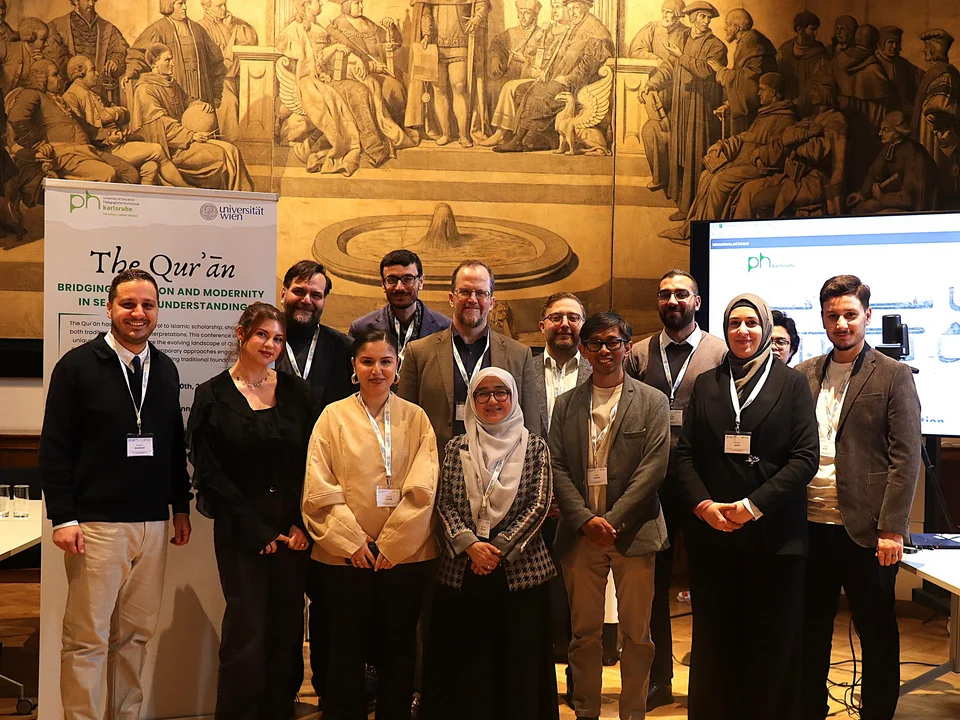
The Qurʾān – Bridging Tradition and Modernity in the Quest for Understanding
A research project on contemporary Qur’anic interpretation at the intersection of classical exegesis and modern hermeneutical approaches. An edited volume is currently being prepared.
-
Head (scarf) ban: Legal, theological, political and educational perspectives
This conference proceedings volume examines the headscarf from interdisciplinary perspectives in the context of debates on bans in German-speaking countries and the potential consequences for social cohesion.
-
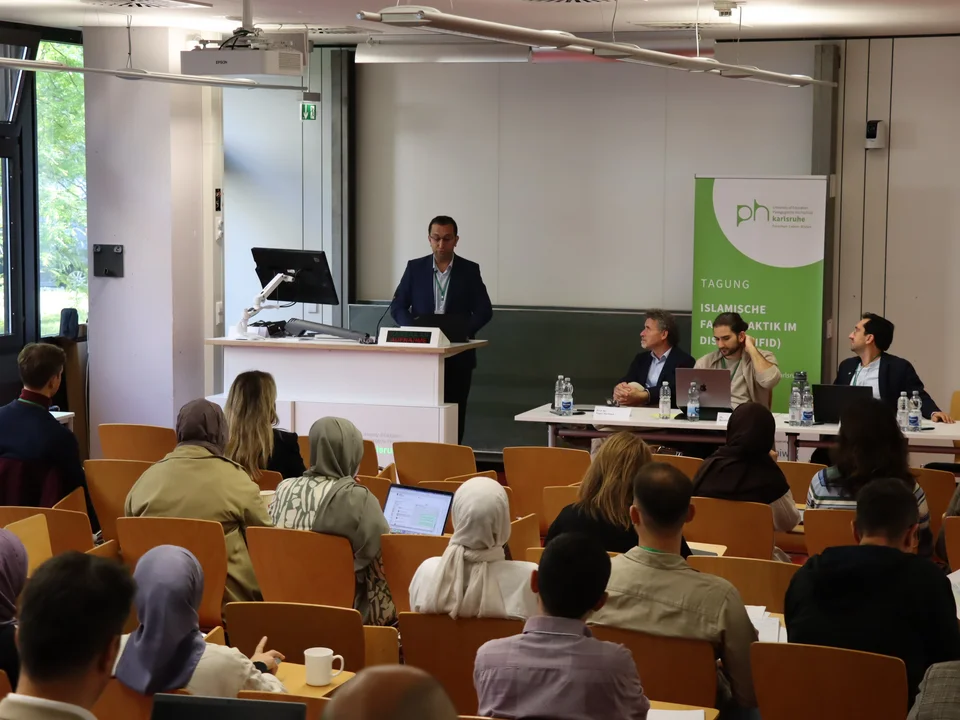
Conference: Islamic Subject Didactics in Discourse (IFID)
The symposium ‘Islamic Subject Didactics in Discourse (IFID)’ took place at the Karlsruhe University of Education in cooperation with the AIWG and was funded by the BMBF. The focus was on the practical applicability of recent approaches to subject didactics for Islamic religious education, which were critically discussed and further developed. A publication of the conference proceedings is currently being prepared as part of the series ‘New Perspectives in Islamic Theology and Religious Education’ (Nomos Verlag).
Teaching
At our university, the subject of Islamic Theology & Religious Education is offered as part of the teacher training programmes: the Bachelor’s degree in Primary Education, the Bachelor’s degree in Secondary Education, the Master’s degree in Primary Education and the Master’s degree in Secondary Education. In addition, the modules in the non-teacher-training Master’s programme in Migration, Education and Democracy are supplemented with specialist expertise.
Another distinctive feature is the opportunity to obtain the specialist certificate for Muslim teachers from Rhineland-Palatinate. The certificate is studied as a subject with a different scope – ‘School-based Learning with a Focus on Islamic Theology/Religious Education’ – on a part-time basis whilst working, and is offered for both primary school teaching and lower secondary education.
Institute team
Organisation
Karlsruhe University of Education
Building
2
Room
B232
Phone
Availability
By arrangement
Organisation
Karlsruhe University of Education
Building
4
Room
416
Phone
Availability
Mon and Thu 8:00 am–12.30 pm
Tue and Wed 8:00 am–3.30 pm
Organisation
Karlsruhe University of Education
Building
2
Room
B222
Phone
Availability
During term time: Mondays from 10.00 am to 11.00 am and Tuesdays from 12.00 noon to 2.00 pm by prior arrangement.
Organisation
Karlsruhe University of Education
Building
2
Room
B234
Phone
Availability
Consultation hours: Wednesdays, 10–11 am; and by arrangement
Organisation
Karlsruhe University of Education
Building
2
Room
B234
Phone
Availability
During term time: Thursdays, 10:00am – 11:30am and by arrangement
Lecturers, Winter Semester 2026/27
Organisation
Karlsruhe University of Education
Availability
By arrangement
Organisation
Karlsruhe University of Education
Availability
By arrangement
Updated on 14 October 2026 by Central Web Editorial Office