

General studies brings together the different perspectives and the distinct approaches to learning of the various subjects from a multi-perspective approach. This multi-perspective approach is a defining feature of general studies in primary school.
With your consent, we store data on your device to analyze your usage behavior and seamlessly integrate external content for you. You can revoke your consent or make specific settings at any time.


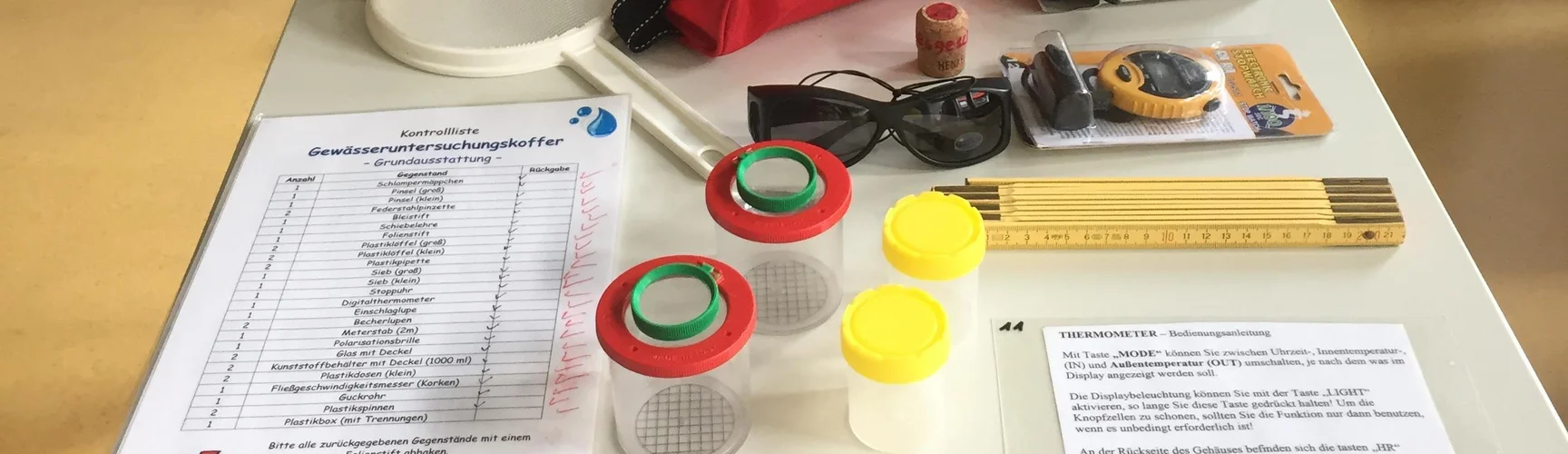
A changing world requires the ability to deal with ambiguity and complexity. In primary school, general studies, alongside maths and German, is the key subject that enables educational and learning processes to shape the future.
As a primary school teacher, you will prepare your pupils to analyse and understand phenomena in their everyday world from a subject-specific perspective. The nine subject areas – Everyday Culture and Health, Biology, Chemistry, Geography, History, Physics, Political Science, Technology and Economics – form the common framework for this.
These subjects – or perspectives – with their specific ways of perceiving, thinking and working to gain knowledge, open up specific perspectives on phenomena in the world around us. However, understanding current and future societal challenges requires a problem-oriented integration of these subject-specific perspectives.
General studies brings together the different perspectives and the distinct approaches to learning of the various subjects from a multi-perspective approach. This multi-perspective approach is a defining feature of general studies in primary school.
At the start of your primary school teacher training programme, you will choose one of the nine subjects as your specialism – in other words, a particular focus – from either the natural sciences and technology or the social sciences within general studies (the so-called specialism areas). In this specialism, you will develop your subject-specific and pedagogical skills in depth.
| Natural Sciences Stream | Social Sciences Stream |
|---|---|
| Everyday Culture and Health | Geography |
| Biology | History |
| Chemistry | Political Science |
| Physics | Economics |
| Engineering |
In addition, you will take modules from the other perspectives of general studies as well as interdisciplinary modules.
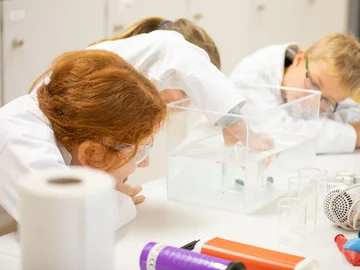
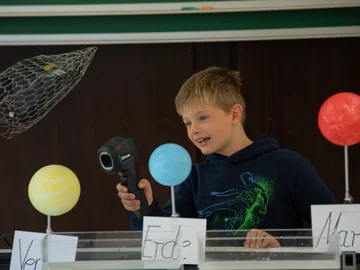
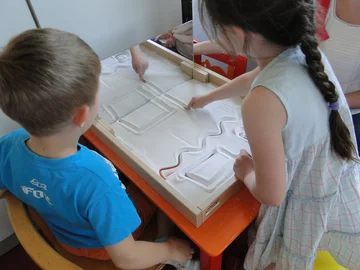
The scientific and pedagogical foundations of your specialism (one of the nine perspectives from the specialisation areas of science and technology or social sciences in general studies).
The scientific and pedagogical foundations of your specialism (one of the nine perspectives from the specialisation areas of science and technology or social sciences in general studies).
In-depth study of the academic and pedagogical aspects of your major subject, as well as a supporting module for the Integrated Semester Placement (ISP).
Note: The ISP forms part of your practical school training as part of the Bachelor’s degree programme.
In-depth study of the academic and pedagogical aspects of your major subject, as well as a supporting module for the Integrated Semester Placement (ISP).
Note: The ISP forms part of your practical school training as part of the Bachelor’s degree programme.
In the Master’s module, you will build on your subject-specific teaching and academic skills in your specialism.
In the Master’s module, you will build on your subject-specific teaching and academic skills in your specialism.
Four good reasons why studying general studies at our university is special:
Prof. Dr.
Janis
Fögele
Department of Transdisciplinary Social Sciences (Geography) | Professor
Organisation
Karlsruhe University of Education
Building
2
Room
B233
Phone
Availability
By arrangement
Updated on 10 September 2026 by Kordula Manegold